
当社の本社は中国広東省にあり、2015年から国内市場(10.00%)、欧州(40.00%)、米国(10.00%)、日本(10.00%)に販売しています。

 著者
著者
Hotel guests rarely discuss a waste bin when everything works, yet they notice interruptions when it does not. A lid needing a hand, a clattering foot pedal, or a bin blocking a narrow bathroom can make a careful room feel less considered. For hotel operators and distributors, a touch-free kitchen bin is useful when it makes disposal calmer and easier.
Waste disposal is a brief task, but it happens at awkward times: when someone is carrying takeaway packaging, leaving a restroom, or clearing a room-service tray. A manual lid adds one more contact point and one more action to complete. In a guest-facing setting, that friction is noticeable because guests compare the bin with the smoothness of the rest of the room.
A sensor-equipped bin can remove that pause by opening as a hand approaches and closing after the waste is dropped. The practical benefit is not a dramatic promise about cleanliness; it is a more direct movement from hand to bin. Housekeeping teams can also approach the same bin without stopping to find a pedal or handle, keeping a quick room reset from becoming a fussy sequence.
Touch-free operation has the most value where a guest is likely to have full hands or prefer minimal contact. The location, clearance, and waste stream matter more than a long feature list. A bin that fits the daily routine gives the sensor a simple job and gives the guest an intuitive place to dispose of waste.
Guest rooms benefit when the bin sits beside a desk, minibar area, or bathroom route without narrowing the walkway. A sensor trash bin should have a clear approach area, so towels, doors, or passing luggage do not interfere with lid movement. That modest planning keeps the unit from feeling like another object the guest has to work around.
Bathrooms make the contact-free advantage especially easy to understand. After washing hands or removing disposable items, guests can discard waste without touching a lid. The goal is convenience with sensible cleaning routines still in place; an automatic trash bin does not replace regular emptying, liner changes, or surface cleaning.
In breakfast areas, lift lobbies, and small meeting rooms, a bin should respond to an intended hand movement rather than distract people nearby. A motion sensor trash can placed too close to a busy passage may receive more movement than a quieter corner. Keeping its sensing area and lid path free helps staff maintain predictable operation.

Noise is often the difference between a useful convenience and a distracting gadget. Guests expect bathroom and bedroom fittings to operate without drawing attention, particularly early in the morning or late at night. For that reason, lid movement deserves as much consideration as the touch-free trigger.
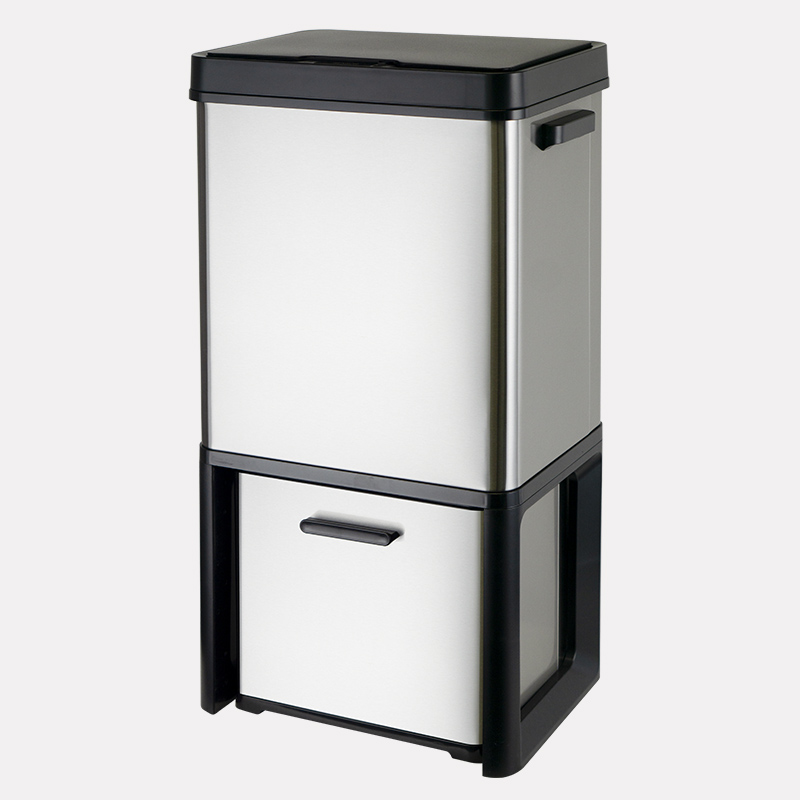
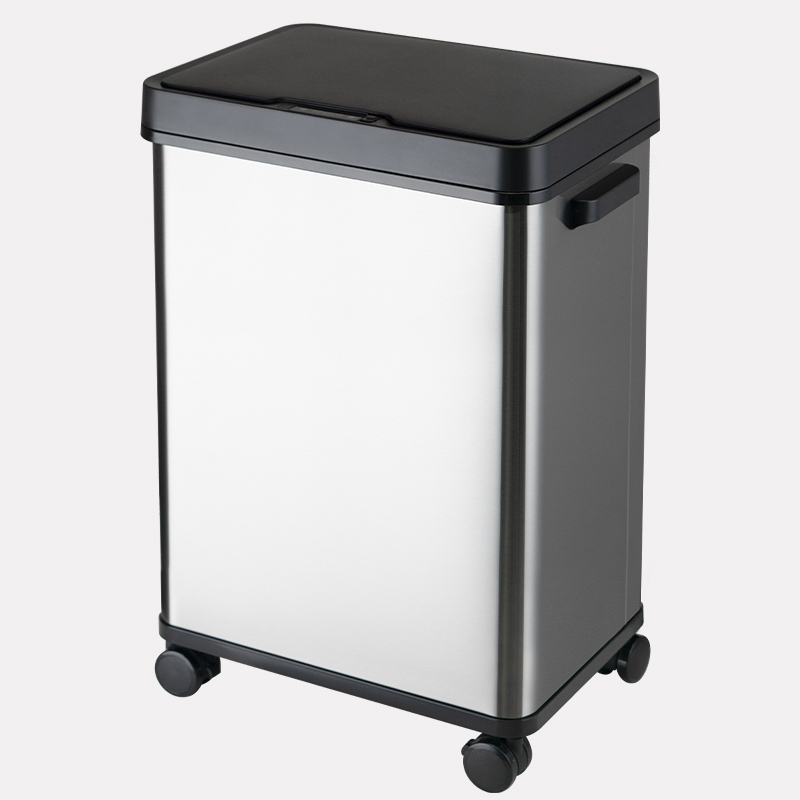
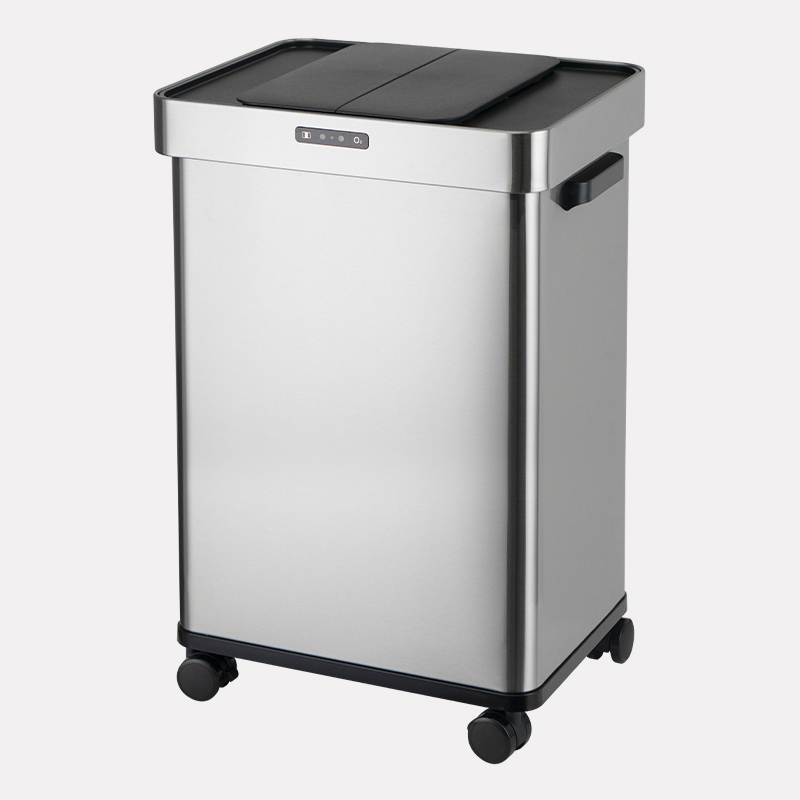
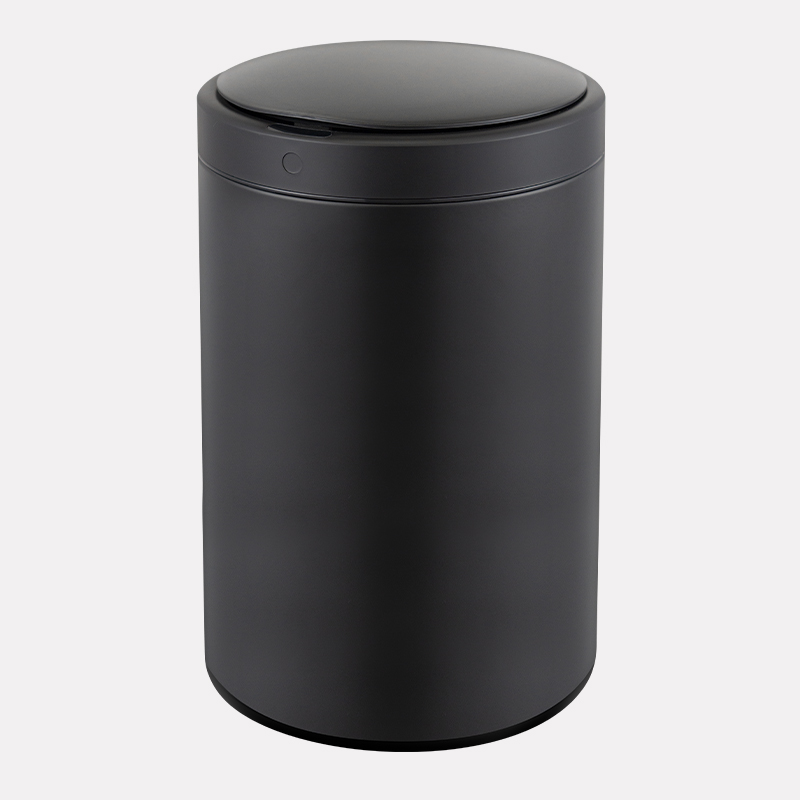
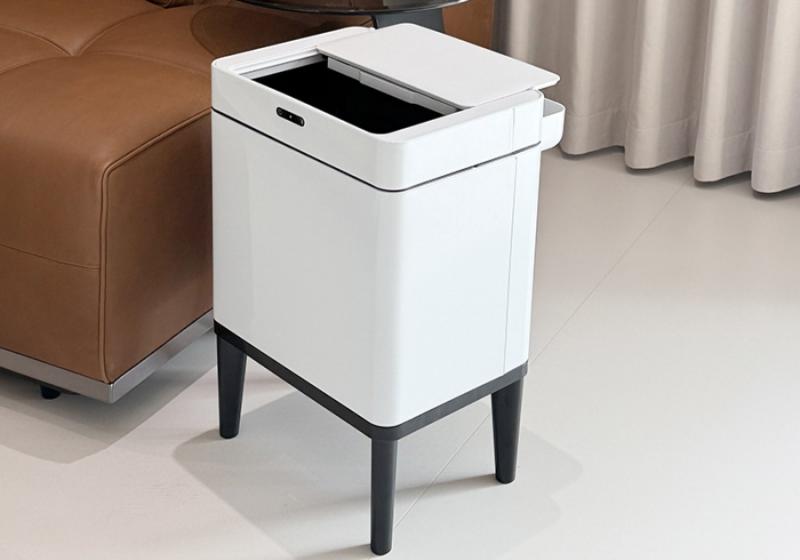
Hi-na Lifestyle offers a relevant example for this guest-space problem through the HN-ZT-W sensor bin. Its quiet sliding lid travels across the top instead of lifting into the room, which can suit locations where overhead or front clearance is limited. The model also has four operation modes, a garbage-bag storage box, and optional caster wheels, so the final setup can support the housekeeping routine rather than interrupt it.
The best hotel placement considers the staff member who changes the liner as well as the guest who drops waste. A neat liner edge, an accessible bin position, and a clear lid path reduce the chance that a routine task becomes a visible annoyance. These details shape whether a smart trash can remains pleasant after the first week.
A sliding lid needs space along the top travel path, while a flip lid needs room above it. That distinction matters near vanity counters, shelving, and wall fixtures. The HN-ZT-W is available in 22 L, 30 L, 42 L, and 50 L capacities, allowing a project to match waste volume by location.
An exposed or slipping liner can undo the visual benefit of a well-designed bin. A secure liner fit keeps the opening tidy and helps the lid move without catching material at the edge. Staff should:
*use the intended liner size;
*seat the retaining point properly;
*keep waste below the lid path.

Touchless bins earn their place in hotels when they remove a tiny inconvenience without adding a new one. The strongest result comes from combining a quiet lid, sensible placement, clean liner handling, and ordinary cleaning discipline. That gives guests an effortless disposal moment and gives operations teams a repeatable room standard.
For hotel distributors and project teams planning guest-facing spaces, Hi-na Lifestyle can help align a 非接触式キッチンゴミ箱 with room layout and daily handling needs. Where an ODM/OEM program is relevant, we also support corporate logo customization schemes so the finished bin fits the project identity.
A touchless kitchen trash can can make disposal easier when guests have full hands or prefer not to touch a lid. It is most useful when the bin is quiet, easy to approach, and placed where it does not obstruct the room.
Yes, a motion sensor trash can can suit bathrooms when the lid has a clear path and the bin does not crowd the vanity or door. Regular liner changes and cleaning remain essential.
A sensor trash bin feels less intrusive when its lid moves smoothly and closes without a harsh impact. Placement also matters, because a stable bin with enough clearance is less likely to rattle or catch nearby items.
Yes, a smart trash can should be matched to the room layout, expected waste volume, and clearance around the lid. Smaller rooms often benefit more from deliberate positioning than from simply choosing a larger capacity.
次の表に記入してください。できるだけ早く返事します。