
- Home
- Products
- Flip-opening Series
- Rectangular Big Sensor Bin
- Rectangular High Leg Sensor Bin


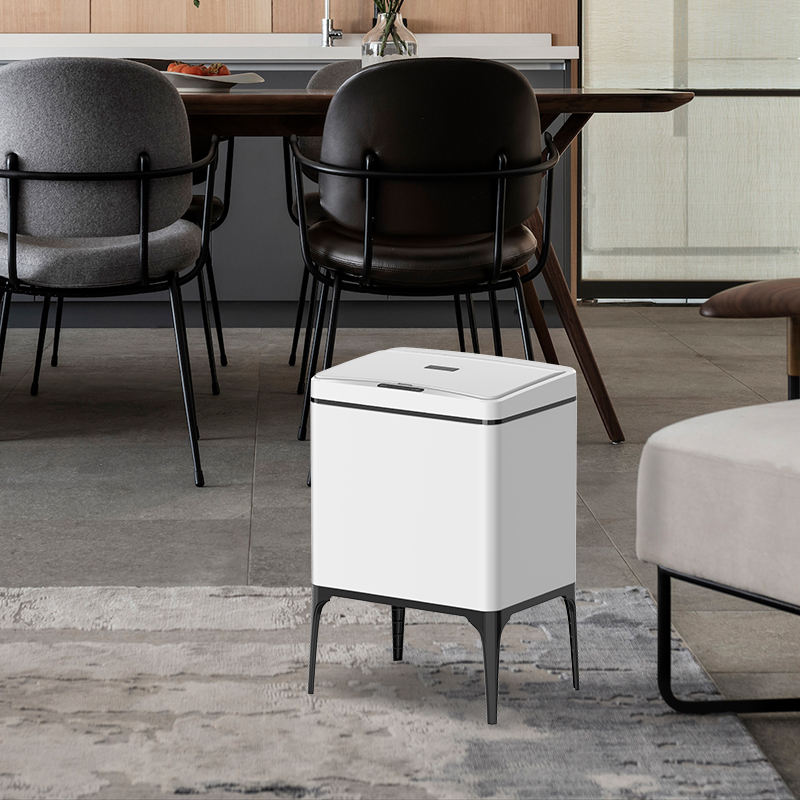
Rectangular High Leg Sensor Bin
Available in various capacities, it fits perfectly into corners and tight spaces, ideal for living rooms, kitchens and offices.
Details
Specification
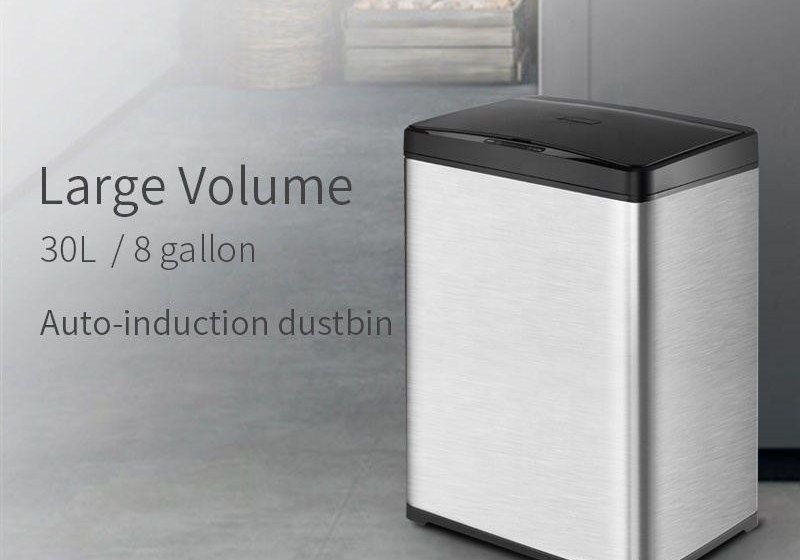
Made of stainless steel and ABS, the HN-ZS02-L features an extra-wide opening for easy disposal of large waste, paired with a highly responsive sensor and silent lid opening.
Available in various capacities, it fits perfectly into corners and tight spaces, ideal for living rooms, kitchens and offices.
INTELLIGENT DELAY CLOSING 5s 5s countdown to close after you leave 15cM high of foot frame Touch the screen Open and close at once 6pcs of AA Alkaline Batteries Lasting 3~4 months SOFT OPEN AND CLOSE AWAY FROM NOISE 0.3 sec quick to open Clean for your hands Smart Motion Sensor Wave your hand and lid open at once 31.5cm HORIZONTAL LARGE OPENING Kitchen trash is easy to swallow Avoid garbage leakage 410 brushed stainless steel layer Anti fouling layer Fingerprint proof layer 6pcs of AA Alkaline Batteries Lasting 3~4 months




| model | HN-ZS02-L |
| capacity | 22L/30L/42L/50L |
| dimensions | 34*25*34/50/60/72cm³ |
| weight | 1.99kg/2.9kg/3.31kg/3.88kg |
| batteries required | yes (6 aa alkaline batteries) |
| color | black/white/silver |
| Indoor/Outdoor Use | Indoor |
| type | Induction Type |
| Material | Stainless Steel |
| Style | Modern |
| MOQ | 1356pcs/1040pcs/890pcs/750pcs |
| After-sales terms | 2% extra lids instead of any guarantee or maintenance. All lids no need to send back for repairs. |
PRODUCTS
Sorting Recycling Sensor Bin
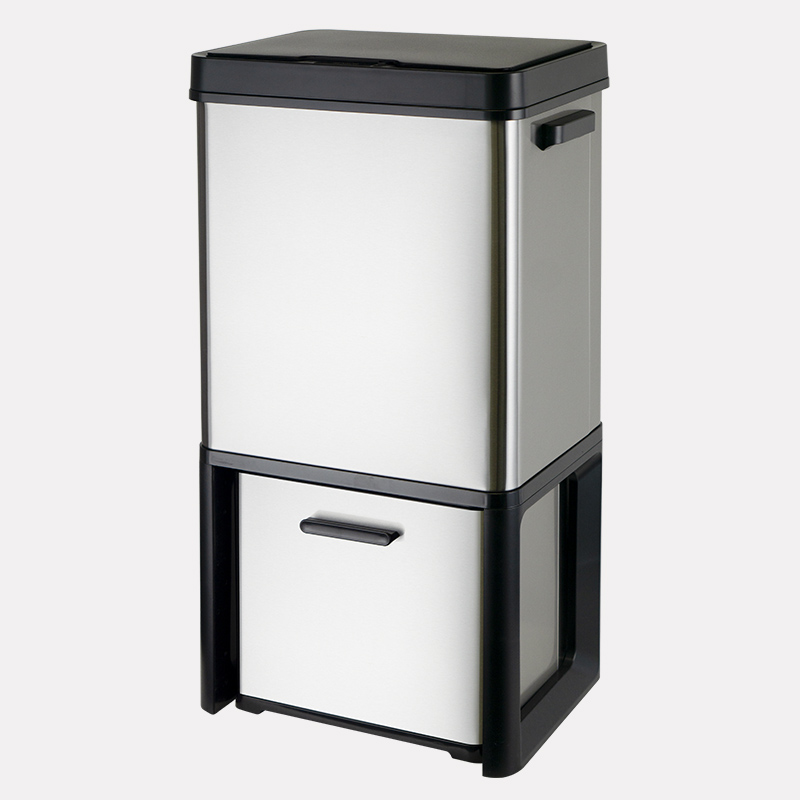
The HN-ZN wheeled sensor bin, featuring a wide opening and dual compartments for dry-wet separation, comes in 72L capacities and is ideal for kitchens, living rooms and offices.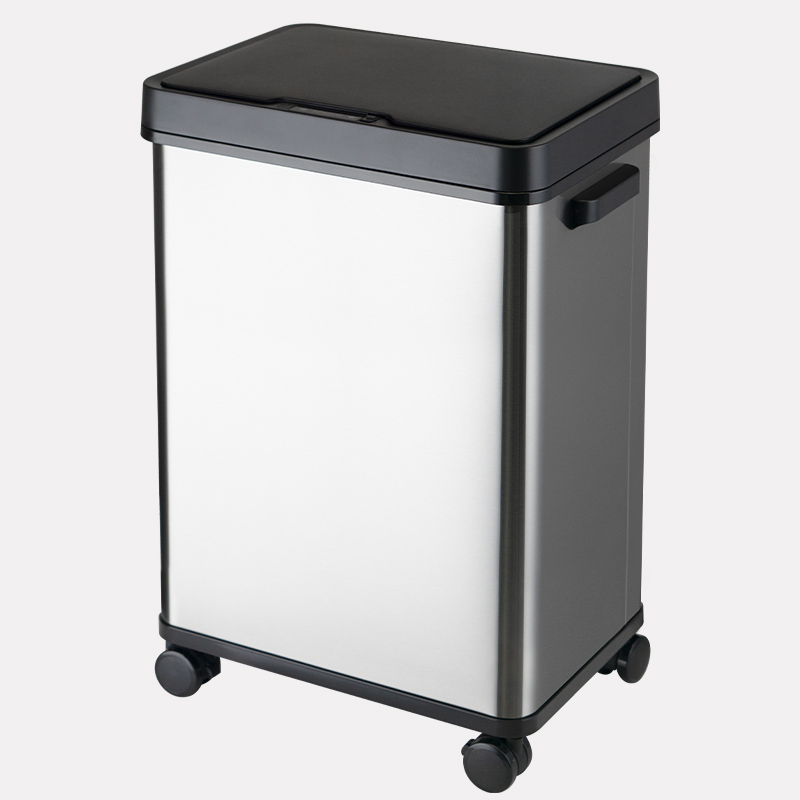
Moving Big Sensor Bin
The HN-ZN-W wheeled sensor bin, featuring a wide opening and dual compartments for dry-wet separation, comes in 50L/68L capacities and is ideal for kitchens, living rooms and offices.
Double Open Recycling Sensor Bin
The HN-ZK bin features double sliding open design and ozone deodorization, made of stainless steel and ABS with wheeled mobility. Adjustable sensing distance and large capacity, it’s ideal for kitchen and pantry.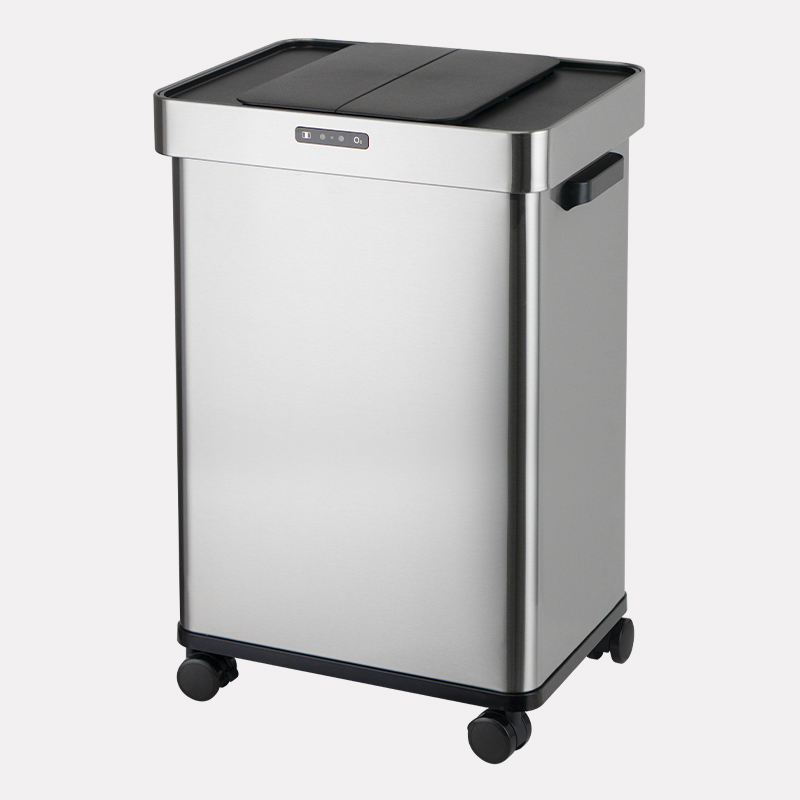
Double Open Sliding Sensor Bin
The HN-ZK-W bin features double sliding open design and ozone deodorization, made of stainless steel and ABS with wheeled mobility. Adjustable sensing distance and large capacity, it’s ideal for kitchen and pantry.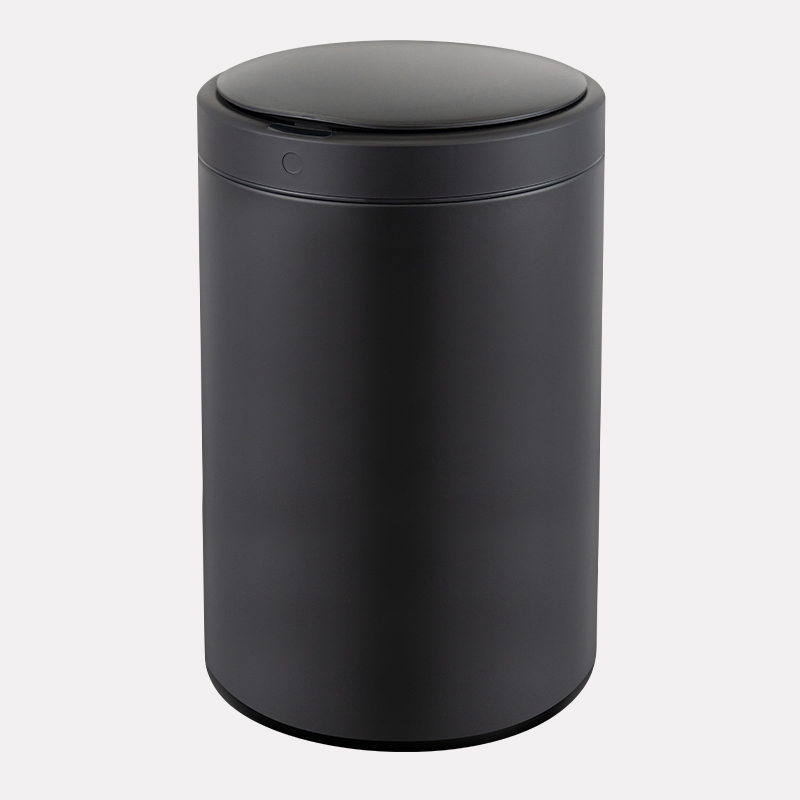
Round Sensor Bin
The 12L small cylindrical stainless steel sensor bin, featuring fingerprint-resistant coating, IPX4 splash-proof design and sensor/manual/vibration opening modes, is ideal for bathrooms, entryways and bedrooms, working well in humid environments with hygienic, easy operation.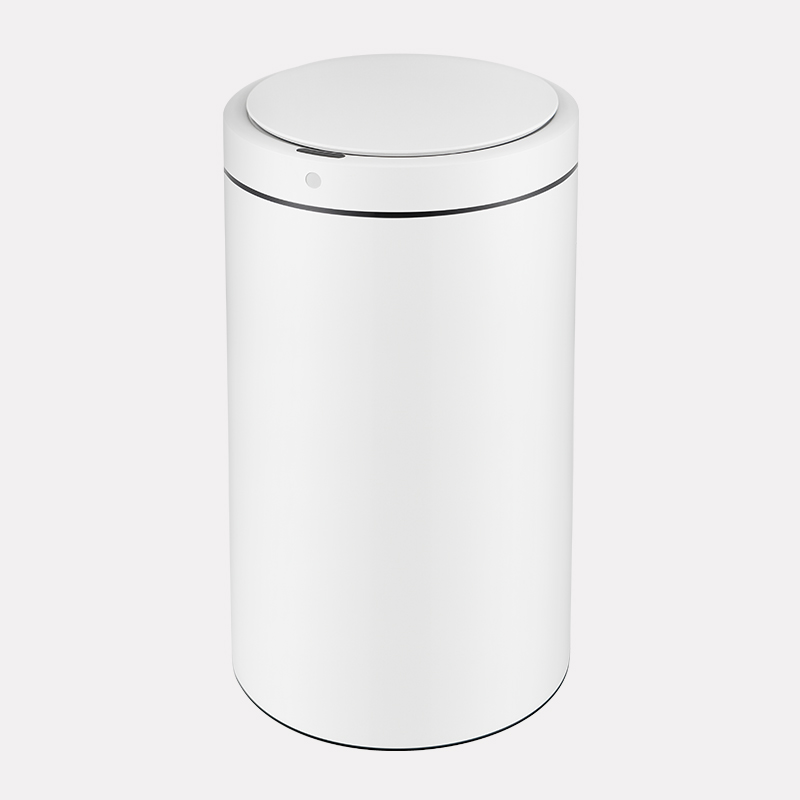
Round Big Sensor Bin
This 30L/42L cylindrical flip-lid sensor bin, made of fingerprint-resistant stainless steel, offers sensor/manual/vibration opening modes and optional deodorizer, ideal for living rooms, kitchens and offices.BLOG

Do Motion Sensor Trash Cans Need Batteries?
Learn which batteries motion sensor trash cans need, how to interpret 4–6 months of battery life, and how facilities can keep automatic lids working.
Battery Care for Motion Sensor Trash Cans
Battery Care for Motion Sensor Trash Cans A battery complaint often begins, “We changed them three weeks ago.” Three weeks tells me when somebody opened the compartment. It says nothing about the lid. Did it sit motionless? Swing halfway and retreat? Open for every coat sleeve passing in the corridor? A facilities team can buy another packet of cells, but it would still have to answer those questions. Otherwise, next month’s packet may go into the same awkwardly placed bin. Watch one complete opening before you move the bin I would start with one ordinary disposal attempt, in the bin’s ordinary spot. Watch from first movement until the lid settles. Someone crossing the doorway immediately afterward provides a second observation without touching the batteries. Later, by all means test it on a bench. The bench will take away the counter overhang, though, along with any passing traffic. Write down where the first observation was made so the two tests can be compared honestly. Reported problem Check in the installed position A useful result to record No movement Switch and battery holder Response to one complete fresh set Halfway stop Bag rim, lid path, overhead space Whether clearing the path changes it Openings without a user Nearby traffic Behavior after a temporary move Repeated battery purchases Change dates and daily openings How a similar bin elsewhere behaves Only then open the holder. Its own markings tell you polarity and cell count; the drawing for a different model does not. Check that each cell meets its contact. A wet holder is a reason to stop the quick battery swap and look up the model’s service procedure. The same goes for corrosion or a broken contact. Set a leaking cell aside for handling and disposal under local rules. A new packet cannot repair the compartment beneath it. One change, one clear result Mixing a partly used cell with new ones makes the next service visit harder, not cheaper. For a model specified for disposable cells, use its stated type and quantity as a matched fresh set. Close the cover properly. Then try several full openings from the normal approach, with the bin back in its ordinary place. Note the result in plain language. “No movement until the cover is pressed” points toward fit or contact; “opens whenever someone passes the doorway” points elsewhere. Hi-na Lifestyle’s AA battery installation guide handles the first setup. What exactly changed when the set went in? “Lid still catches at the rear corner” is a useful answer. “Batteries done” is not. If pressure on the compartment cover restores operation, its contacts deserve attention before a motor is ordered. The photograph illustrates a manual-opening detail on one design when the power is exhausted. It does not tell us where the cells sit in every bin. Use the selected model’s instructions for opening and for storage. Before a stored unit goes back to work, look inside the holder again; a date on the outside of a carton cannot show what happened there. The awkward part of a battery-life claim “Four to six months” is easy to quote and easy to misunderstand. The missing footnote is the duty cycle: which cells, how many openings, what surroundings? In a pantry, the lid may move all morning; a meeting room down the hall may remain empty until a late afternoon call. Same cabinet, very different work for its motor. A calendar reminder made from the quoted range alone would conceal that difference. For an order covering several sites, a small log beats a blanket timetable. A line for model, room, cell type, installation date and removal date is a start. The next line matters more: why were the cells removed? A bin that opens for passing traffic should be described that way. A bin whose lid rubs against the underside of a counter should have that noted as well. If the same model works longer across the hall, the supplier needs that comparison, including the different conditions; it is more revealing than an average for the entire shipment. When a tender gives battery runtime real weight, the published month range needs its test conditions beside it. A sample can sit at the proposed site while someone counts lid cycles over an agreed period. Such a trial cannot predict every future room. It can tell the buyer how the quoted figure relates to this doorway, this traffic and these cells. Better evidence for a service conversation Consider a message that says only “slow lid, please send a new one.” What can the supplier do with it? Perhaps the bag folds into the hinge; perhaps a wall is too close; perhaps a cell has poor contact. A short clip, taken far enough back to show the bin and its surroundings, narrows the question. Attach the model, the cells fitted, their change date and one sentence about clearing the path. If the symptom vanished after a move, that belongs in the first reply, not the fourth. Here is a hypothetical service note: “Fresh specified set fitted Tuesday. Lid still stops halfway below the shelf. It closes normally after the bin is pulled forward.” That note does not prove which part is faulty, but it makes a replacement lid a less obvious first step. If the halfway stop follows the bin into open space, I would pass the clip and service note to technical support. An invoice for batteries, on its own, cannot describe either result. Buy cells for a model, not a product photograph The sensor bin product range is a sensible place to compare designs. A photograph in that range cannot show what is printed inside every battery holder. I would make a small purchasing line for each chosen model: cell type, cell count, and whether a starter set comes in the carton. A warehouse order based on appearance alone is too easy to get wrong. The selected unit’s label and instructions settle the order. The Hi-na Lifestyle company page uses the wording “Zhongshan Hi-na lifestyle Co., Ltd.” Its HN-ZT-W moving sliding sensor bin page gives a concrete battery entry: six AA alkaline cells. I would copy that entry into an HN-ZT-W order sheet, not into a generic sensor-bin column. An ODM/OEM enquiry also needs the intended site, model, quantity, packaging and corporate LOGO requirements. Put those details on the contact page enquiry and request a written answer about cells and runtime assumptions for the proposed configuration. Conclusion I would put one sentence at the end of every battery-change record: “After the new set, the lid ____.” That blank forces a result onto the page. Fill it only after watching a few cycles with the bin back in position. If the same complaint returns, the next technician has a starting point more useful than the date of a battery purchase. FAQs 1. What if only one cell appears weak? Follow the model instructions. In a multi-cell holder, a complete matched fresh set gives a much clearer fault check than a mix of old and new cells. 2. The lid is slow even with new batteries. What next? Watch where it slows. A caught bag or restricted space can affect its travel. Check the holder as well, then describe the result after clearing the path. 3. Which details belong on the maintenance record? At minimum: model, location, specified cell type, change date and what the lid did during several full cycles. Add repeated openings or an obstruction if either was seen.

The 140th Canton Fair: A Successful Showcase of Smart Home Innovation by Hi-Na
Hi-Na Lifestyle successfully showcased its smart sensor bin collection and brand-new Smart Laundry Basket at the 140th Canton Fair. We connected with buyers from around the world, shared innovative home solutions, and explored new business opportunities. The exhibition may be over, but new partnerships are just beginning. We look forward to growing together with our global partners!

Motion Sensor Trash Cans for Commercial Hygiene
Inside active kitchens, medical clinics, corporate offices, and hospitality back-of-house areas, touching a lid creates an unwanted interruption. Furthermore, it adds an extra physical touchpoint. A motion sensor trash can lets staff throw away garbage using a quick hand wave. Consequently, teams maintain a disposal habit that stays much cleaner. This process is also easier to repeat throughout the day. Genuine value comes from building steady daily habits. It does not come from having a trendy device. Why touchless disposal matters in shared spaces Communal waste areas experience frequent contact from individuals walking through the room. Well-positioned smart sensor trash cans lower the requirement to press a lid or raise a flap. As a result, employees can hold onto a tray, wear a safety glove, or grip a cleaning tool while they throw away trash. This basic adjustment promotes smoother workflows during peak hours. Improving hygiene relies heavily on accurate placement and regular upkeep. These factors matter just as much as the actual sensor technology. Placing a bin close to where trash is generated reduces the carrying distance. Moreover, this setup minimizes messy drips and prevents overflow. Clear bag replacements, rigid cleaning schedules, and adequate volume make sure the hands-free function remains genuinely useful. It stops the feature from being merely a visual addition. Where the workflow improves first Commercial kitchens secure a distinct advantage. Staff can throw away food scraps without touching a dirty lid between different tasks. Clinics and healthcare centers can reduce communal touchpoints. This applies specifically around standard, non-hazardous waste areas. Open-plan offices can maintain easy-to-reach bins. They achieve this without relying on foot pedals or dealing with loud lid noises. Inside an active kitchen, a kitchen sensor trash can needs to react to a hand holding food, wrappers, or thick gloves. Therefore, facility teams should evaluate the entire user interaction. They should not merely look at the basic sensor specifications. Sensor performance shapes the hygiene experience The sensor must react fast enough to match natural human motion. Additionally, it has to close gently to prevent multiple manual touches. Incorrect triggers create a completely different problem. For instance, the lid might open when individuals simply walk by. This flaw drains battery power and causes staff to lose trust in the device. A reliable detection range and a consistent closing delay serve as excellent hygiene safeguards. Sound levels greatly influence how readily users accept the product. Inside offices, medical clinics, and front reception spaces, a silent open-and-close motion prevents the trash area from turning into a noisy distraction. The HN-ZT-W sliding sensor trash bin features a lid built specifically for quiet operation. Furthermore, it provides four distinct working modes. These modes can be easily modified to fit various daily room activities. A simple operating check for teams Evaluate the sensing range by copying the exact hand motions that employees perform. Observe a full opening and closing cycle. Look closely for any motor hesitation, physical scraping, or unexpected reopening events. Confirm that the plastic bag edge remains fully inside the main container. It absolutely must not obstruct the electronic sensor path. Capacity and placement should follow waste flow Selecting the right volume becomes simple when you look at actual trash generation rather than just measuring room dimensions. A compact bin could fit a single desk area flawlessly. On the other hand, a larger receptacle is significantly more practical beside a busy food preparation counter. Hi-na Lifestyle manufactures sensor bins in sizes from 12L up to 72L. Consequently, this broad range helps distributors and facility managers align the physical size and emptying schedule with the specific location needs. Operating element Details to verify Reason for importance Foot traffic volume The number of times people throw away trash during busy hours Heavy usage rapidly exposes sluggish sensors and a lack of storage space Physical space limits Unobstructed area above the top cover and clear pathways around the unit An excellent sensor might still struggle if nearby furniture restricts the lid movement Maintenance schedule The specific washing technique and the timetable for changing bags Regular cleaning protects the electronic lens and helps manage bad smells Movement requirements Staying in one spot versus moving around occasionally Wheel attachments help greatly when a container must travel across various work areas A commercial sensor bin requires a dependable maintenance schedule. Distributors can demonstrate bag installation, washing techniques, and functional modes with much less effort. This happens when the entire product line operates uniformly across different building zones. How a supplier can support consistent rollout Business purchasers require a consistent product experience across several rooms or separate properties. Therefore, they must confirm identical sensor reactions, lid speeds, structural materials, and outside coatings in every single manufacturing batch. Hi-na Lifestyle combines internal research and development with rigorous quality inspections. These checks cover raw materials, partially completed components, and fully assembled bins. They supply both stainless steel and powder-coated cold-rolled metal options. These choices work well in diverse commercial settings. A distributor looking to build a specific product line can utilize the official sensor trash bin catalog. This resource makes it easy to evaluate volumes and physical shapes. Afterward, they can assign the correct designs to specific buyer groups. Teams creating a custom brand collection should also review the available surface coatings and modification choices for their selected model. A smart trash can is highly beneficial when its lid action, storage size, and cleaning requirements match the local environment. Facility managers should evaluate these specific factors during a standard work shift. Following this test, they should provide employees with brief maintenance guidelines. This training must cover the sensor lens, the plastic bag placement, and the washing timetable. That brief educational step transforms a simple hardware feature into a reliable sanitary habit. Practical takeaway for commercial teams Motion detection improves sanitation by eliminating a physical contact point during standard waste disposal. You should select the container size based on actual garbage output. Position the unit exactly where employees are actively working. Always verify the detection speed, closing action, sound levels, and washing accessibility prior to full installation. The correct commercial sensor bin ensures that the most sanitary action is also the simplest one to perform. For bulk purchasing or large project orders, Hi-na Lifestyle remains available to plan the ideal product shape and branding strategy. This discussion can begin as soon as the intended use, required volume, and daily usage patterns are clearly defined. FAQ Do motion sensor trash cans improve hygiene in offices? They successfully reduce physical lid contact at communal garbage stations. This benefit is particularly noticeable when the unit sits near office desks, printing machines, or staff break rooms. It also requires a rigorous cleaning timetable to work best. Are touchless bins suitable for commercial kitchens? These items are highly effective for managing standard food prep garbage. However, their physical volume, bag security, lens location, and washing schedule must perfectly align with the daily kitchen operations. What causes a sensor bin to open too often? Frequent triggers usually happen if the detection area points toward a highly active corridor. Additionally, shiny items sitting near the lens can cause issues. A top cover obstructed by a loose plastic liner will also create unwanted openings. How should teams select bin capacity? Analyze the maximum trash output during busy hours and check the current emptying schedule. Afterward, ensure there is adequate space for the liner to seal shut. It must never press up against the electronic lens or the top mechanical parts. Can a commercial sensor bin be branded for distribution? ODM and OEM partnerships can easily incorporate custom logo placements, unique product shapes, and various approved design modifications. These conversations typically happen after the primary market and specific use cases are firmly established.
SERVICE

Attentitve Pre-Sales Service
We deeply understand that every link from product concept conception to final mass production cannot be sloppy. To this end, we have built a full-process pre-sales service system from ODM/OEM custom design to product reliability verification, ensuring that each of your projects is accurate, reliable and efficient. I.ODM & OEM Custom Design Services: Turn Your Vision into Reality 1.ODM Service: Rapid Customization Based on Mature Platforms Massive Mature Products: Relying on our years of technical accumulation in the field of sensor trash cans and smart home, we have a wealth of certified mature products. Rapid Function Customization: On the premise of not changing the core structure, we can quickly adjust the appearance color, size, logo and functional modules to match your brand style and target market. Efficient Market Launch Cycle: Shorten the R&D cycle, reduce development costs, and help you quickly seize market opportunities. 2.OEM Service: In-Depth Manufacturing Based on Your Design If you already have independent product design and intellectual property rights, our OEM service will provide you with excellent manufacturing support. Seamless Drawing Connection: Our professional team receives your CAD drawings and appearance design drafts, conducts Design for Manufacturability (DFM) analysis, and provides optimization suggestions. Full-Process Development: From electronic circuit development, structural design, prototype production to sample confirmation, we lead the whole process to ensure that the design concept is perfectly implemented. Brand Autonomy: Fully retain your brand and design intellectual property rights, and we focus on providing high-quality production and manufacturing services. II.Strict Product Reliability Testing: Quality is the Cornerstone of Our Commitment Core Test Item: Drop Test This is crucial to simulate the most common accidents in product logistics, transportation, handling and daily use. Test Standards: Implemented in accordance with international mainstream standards such as ISTA (International Safe Transit Association) and GB/T (China National Standard). Test Methods: Face Drop: Package the product and drop it from a specified height onto a rigid plane to test the impact resistance of the package and internal products. Edge Drop: Select the most fragile edge of the package for drop test. Corner Drop: Select the most fragile corner of the package for drop test. Test Requirements: After the drop test, the product has no structural damage.No functional abnormalities (power-on test to ensure sensitive induction, normal operation of motor/circuit, no loose noise). Ensure effective protection of the product and meet the requirements of transportation safety. Other Key Reliability Tests In addition to the drop test, we will also conduct the following comprehensive tests according to product characteristics and target market requirements to fully ensure quality: Environmental Test: Constant temperature and humidity test to verify the stability and durability of the product in different climate environments. Life Test: Conduct tens of thousands of cycles of fatigue tests on core functions such as inductive lid opening, closing and buttons to ensure long-term stable operation. Salt Spray Test (Using Salt Spray Test Chamber): Specifically for metal components (such as stainless steel and ABS plastic) to verify corrosion resistance and durability, which is crucial for products used in humid or coastal areas. Sealing and Waterproof Test: For products used in humid environments such as bathrooms and kitchens, conduct IPX level waterproof test. III.Our Pre-Sales Service Commitment: Professional, Transparent and Win-Win One-on-One Dedicated Consultant: Equipped with experienced project managers to connect the whole process, communicate needs efficiently and solve problems. Transparent Progress Report: In each stage such as design proofing and test evaluation, timely feedback the progress to you to ensure that everything is under control. Authoritative Test Report: Provide legally effective third-party test reports or internal authoritative test data to make your customers more trustworthy. One-Stop Solution: From design, testing to subsequent certification and supply chain management, we provide a full-chain service to reduce your management costs and risks. Choosing us means you choose not only a manufacturer, but also a trustworthy strategic partner. Let us work together to create your successful products with professional pre-sales service and strict quality standards.
Highly Warm After-Sales Service
Deeply rooted in the smart home industry, we firmly believe that high-quality products require comprehensive after-sales support. From order delivery to product use, from problem consultation to technical assistance, we take customers as the center, build an efficient, thoughtful and professional after-sales service system, fulfill every commitment with actions, provide full-process support for your cooperation, and solve your worries. I.Exclusive Support for MOQ 40HQ Full Container For partners whose orders reach the MOQ 40HQ full container, we specially provide exclusive after-sales benefits to help you operate your products more easily and efficiently:We will provide a certain number of free smart lids spare parts (the specific quantity is determined according to the order scale) to cover the loss and replacement needs of returns and exchanges. The spare smart lids are fully compatible with the original products, requiring no additional debugging and can be directly replaced for use. This effectively reduces your inventory costs and after-sales losses, ensuring that the products are continuously and stably launched into the market. II.Timely Technical Guidance: Quickly Solve Usage Problems Whether you encounter any problems during product installation, commissioning, use or maintenance, we will provide comprehensive and timely technical guidance services: Rapid Response Mechanism: We respond to your after-sales inquiries within 24 hours on working days. For simple problems, we provide one-on-one accurate answers through phone calls, emails, instant messaging and other methods to guide you to solve problems quickly; Professional Technical Support: Equipped with an experienced technical team, we provide personalized solutions such as remote guidance and video teaching for complex technical problems, ensuring that problems are solved efficiently without affecting your normal operation; Regular Technical Empowerment: Regularly push product maintenance skills, common problem solutions and other materials to help you avoid potential use risks in advance and improve product use efficiency and service life. III. After-Sales Support: Covering Every Link of Cooperation Our after-sales service is not only about solving problems, but also runs through every link after order delivery, comprehensively protecting your rights and interests: Product Quality Guarantee: If the product has quality problems caused by non-human damage, we will provide quality assurance services as needed to ensure that your rights and interests are not lost; Spare Parts Supply Support: In addition to the exclusive spare smart lids for full container orders, we provide sufficient supply of product spare parts to ensure that you can purchase quickly when needed, reducing downtime losses; After-Sales Follow-Up Service: After order delivery, we will conduct regular after-sales follow-up visits to understand product usage, collect your feedback and suggestions, and continuously optimize products and services to improve your cooperation experience; Personalized After-Sales Plan: According to the needs of different customers, we can customize exclusive after-sales service plans to adapt to your operation mode and provide more targeted support. IV.After-Sales Commitment: Serve Wholeheartedly, Win-Win Future We always put customer satisfaction first, adhere to the following after-sales commitments, and work with you to achieve win-win results: Integrity-Based: We will not shirk or perfunctory, treat every after-sales problem with sincerity, and fully protect the legitimate rights and interests of customers; Efficient and Fast: Optimize the after-sales process, improve response speed and problem-solving efficiency, and minimize customer losses; Professional and Responsible: The technical team is on call 24/7, solving every technical problem with professional ability and rigorous attitude; Long-Term Companion: No matter how long we cooperate, we will always provide continuous and stable after-sales service and become your reliable partner. Choosing us means choosing not only high-quality products, but also a reassuring after-sales guarantee. If you have any after-sales needs, questions or suggestions, please feel free to contact our after-sales team. We will serve you wholeheartedly, grow together with you and create value together.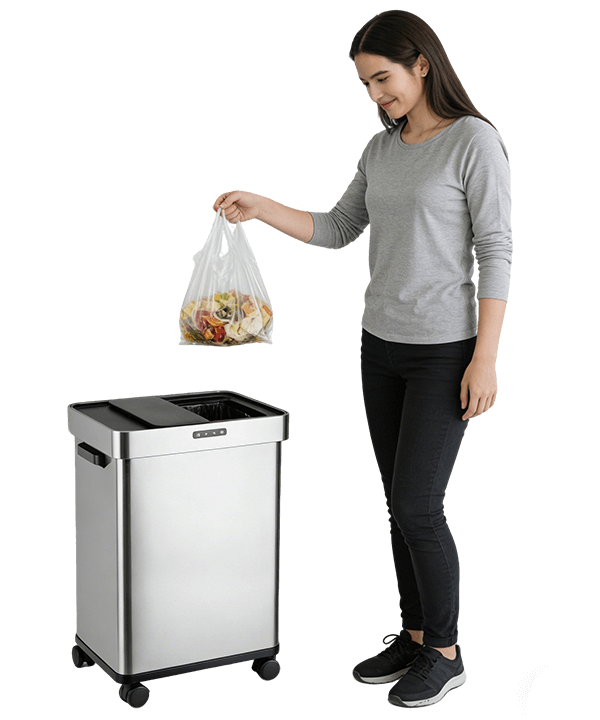

LOVE TO HEAR FROM YOU GET IN TOUCH!
Please fill out the form below and we will get back to you as soon as possible.