

Do Motion Sensor Trash Cans Need Batteries?
Learn which batteries motion sensor trash cans need, how to interpret 4–6 months of battery life, and how facilities can keep automatic lids working.
Battery Care for Motion Sensor Trash Cans
Battery Care for Motion Sensor Trash Cans
A battery complaint often begins, “We changed them three weeks ago.” Three weeks tells me when somebody opened the compartment. It says nothing about the lid. Did it sit motionless? Swing halfway and retreat? Open for every coat sleeve passing in the corridor? A facilities team can buy another packet of cells, but it would still have to answer those questions. Otherwise, next month’s packet may go into the same awkwardly placed bin.
Watch one complete opening before you move the bin
I would start with one ordinary disposal attempt, in the bin’s ordinary spot. Watch from first movement until the lid settles. Someone crossing the doorway immediately afterward provides a second observation without touching the batteries. Later, by all means test it on a bench. The bench will take away the counter overhang, though, along with any passing traffic. Write down where the first observation was made so the two tests can be compared honestly.
Reported problem
Check in the installed position
A useful result to record
No movement
Switch and battery holder
Response to one complete fresh set
Halfway stop
Bag rim, lid path, overhead space
Whether clearing the path changes it
Openings without a user
Nearby traffic
Behavior after a temporary move
Repeated battery purchases
Change dates and daily openings
How a similar bin elsewhere behaves
Only then open the holder. Its own markings tell you polarity and cell count; the drawing for a different model does not. Check that each cell meets its contact. A wet holder is a reason to stop the quick battery swap and look up the model’s service procedure. The same goes for corrosion or a broken contact. Set a leaking cell aside for handling and disposal under local rules. A new packet cannot repair the compartment beneath it.
One change, one clear result
Mixing a partly used cell with new ones makes the next service visit harder, not cheaper. For a model specified for disposable cells, use its stated type and quantity as a matched fresh set. Close the cover properly. Then try several full openings from the normal approach, with the bin back in its ordinary place. Note the result in plain language. “No movement until the cover is pressed” points toward fit or contact; “opens whenever someone passes the doorway” points elsewhere.
Hi-na Lifestyle’s AA battery installation guide handles the first setup. What exactly changed when the set went in? “Lid still catches at the rear corner” is a useful answer. “Batteries done” is not. If pressure on the compartment cover restores operation, its contacts deserve attention before a motor is ordered.
The photograph illustrates a manual-opening detail on one design when the power is exhausted. It does not tell us where the cells sit in every bin. Use the selected model’s instructions for opening and for storage. Before a stored unit goes back to work, look inside the holder again; a date on the outside of a carton cannot show what happened there.
The awkward part of a battery-life claim
“Four to six months” is easy to quote and easy to misunderstand. The missing footnote is the duty cycle: which cells, how many openings, what surroundings? In a pantry, the lid may move all morning; a meeting room down the hall may remain empty until a late afternoon call. Same cabinet, very different work for its motor. A calendar reminder made from the quoted range alone would conceal that difference.
For an order covering several sites, a small log beats a blanket timetable. A line for model, room, cell type, installation date and removal date is a start. The next line matters more: why were the cells removed? A bin that opens for passing traffic should be described that way. A bin whose lid rubs against the underside of a counter should have that noted as well. If the same model works longer across the hall, the supplier needs that comparison, including the different conditions; it is more revealing than an average for the entire shipment.
When a tender gives battery runtime real weight, the published month range needs its test conditions beside it. A sample can sit at the proposed site while someone counts lid cycles over an agreed period. Such a trial cannot predict every future room. It can tell the buyer how the quoted figure relates to this doorway, this traffic and these cells.
Better evidence for a service conversation
Consider a message that says only “slow lid, please send a new one.” What can the supplier do with it? Perhaps the bag folds into the hinge; perhaps a wall is too close; perhaps a cell has poor contact. A short clip, taken far enough back to show the bin and its surroundings, narrows the question. Attach the model, the cells fitted, their change date and one sentence about clearing the path. If the symptom vanished after a move, that belongs in the first reply, not the fourth.
Here is a hypothetical service note: “Fresh specified set fitted Tuesday. Lid still stops halfway below the shelf. It closes normally after the bin is pulled forward.” That note does not prove which part is faulty, but it makes a replacement lid a less obvious first step. If the halfway stop follows the bin into open space, I would pass the clip and service note to technical support. An invoice for batteries, on its own, cannot describe either result.
Buy cells for a model, not a product photograph
The sensor bin product range is a sensible place to compare designs. A photograph in that range cannot show what is printed inside every battery holder. I would make a small purchasing line for each chosen model: cell type, cell count, and whether a starter set comes in the carton. A warehouse order based on appearance alone is too easy to get wrong. The selected unit’s label and instructions settle the order.
The Hi-na Lifestyle company page uses the wording “Zhongshan Hi-na lifestyle Co., Ltd.” Its HN-ZT-W moving sliding sensor bin page gives a concrete battery entry: six AA alkaline cells. I would copy that entry into an HN-ZT-W order sheet, not into a generic sensor-bin column. An ODM/OEM enquiry also needs the intended site, model, quantity, packaging and corporate LOGO requirements. Put those details on the contact page enquiry and request a written answer about cells and runtime assumptions for the proposed configuration.
Conclusion
I would put one sentence at the end of every battery-change record: “After the new set, the lid ____.” That blank forces a result onto the page. Fill it only after watching a few cycles with the bin back in position. If the same complaint returns, the next technician has a starting point more useful than the date of a battery purchase.
FAQs
1. What if only one cell appears weak?
Follow the model instructions. In a multi-cell holder, a complete matched fresh set gives a much clearer fault check than a mix of old and new cells.
2. The lid is slow even with new batteries. What next?
Watch where it slows. A caught bag or restricted space can affect its travel. Check the holder as well, then describe the result after clearing the path.
3. Which details belong on the maintenance record?
At minimum: model, location, specified cell type, change date and what the lid did during several full cycles. Add repeated openings or an obstruction if either was seen.

Motion Sensor Trash Cans for Commercial Hygiene
Inside active kitchens, medical clinics, corporate offices, and hospitality back-of-house areas, touching a lid creates an unwanted interruption. Furthermore, it adds an extra physical touchpoint. A motion sensor trash can lets staff throw away garbage using a quick hand wave. Consequently, teams maintain a disposal habit that stays much cleaner. This process is also easier to repeat throughout the day. Genuine value comes from building steady daily habits. It does not come from having a trendy device.
Why touchless disposal matters in shared spaces
Communal waste areas experience frequent contact from individuals walking through the room. Well-positioned smart sensor trash cans lower the requirement to press a lid or raise a flap. As a result, employees can hold onto a tray, wear a safety glove, or grip a cleaning tool while they throw away trash. This basic adjustment promotes smoother workflows during peak hours.
Improving hygiene relies heavily on accurate placement and regular upkeep. These factors matter just as much as the actual sensor technology. Placing a bin close to where trash is generated reduces the carrying distance. Moreover, this setup minimizes messy drips and prevents overflow. Clear bag replacements, rigid cleaning schedules, and adequate volume make sure the hands-free function remains genuinely useful. It stops the feature from being merely a visual addition.
Where the workflow improves first
Commercial kitchens secure a distinct advantage. Staff can throw away food scraps without touching a dirty lid between different tasks.
Clinics and healthcare centers can reduce communal touchpoints. This applies specifically around standard, non-hazardous waste areas.
Open-plan offices can maintain easy-to-reach bins. They achieve this without relying on foot pedals or dealing with loud lid noises.
Inside an active kitchen, a kitchen sensor trash can needs to react to a hand holding food, wrappers, or thick gloves. Therefore, facility teams should evaluate the entire user interaction. They should not merely look at the basic sensor specifications.
Sensor performance shapes the hygiene experience
The sensor must react fast enough to match natural human motion. Additionally, it has to close gently to prevent multiple manual touches. Incorrect triggers create a completely different problem. For instance, the lid might open when individuals simply walk by. This flaw drains battery power and causes staff to lose trust in the device. A reliable detection range and a consistent closing delay serve as excellent hygiene safeguards.
Sound levels greatly influence how readily users accept the product. Inside offices, medical clinics, and front reception spaces, a silent open-and-close motion prevents the trash area from turning into a noisy distraction. The HN-ZT-W sliding sensor trash bin features a lid built specifically for quiet operation. Furthermore, it provides four distinct working modes. These modes can be easily modified to fit various daily room activities.
A simple operating check for teams
Evaluate the sensing range by copying the exact hand motions that employees perform.
Observe a full opening and closing cycle. Look closely for any motor hesitation, physical scraping, or unexpected reopening events.
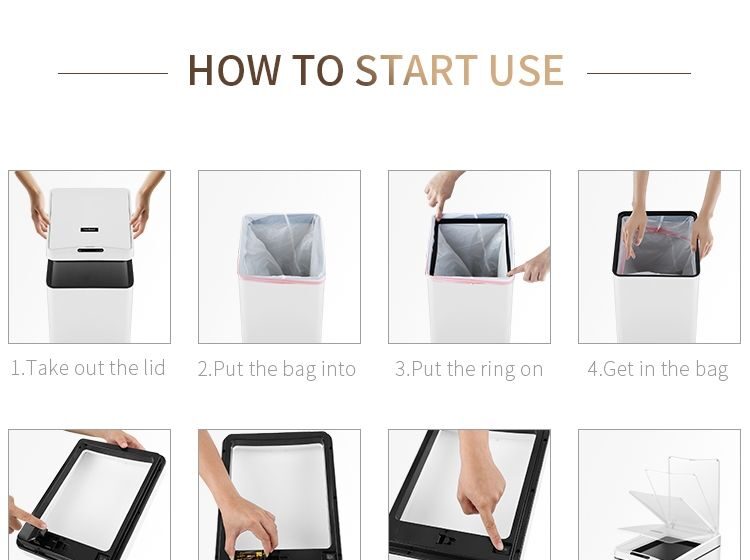
Confirm that the plastic bag edge remains fully inside the main container. It absolutely must not obstruct the electronic sensor path.
Capacity and placement should follow waste flow
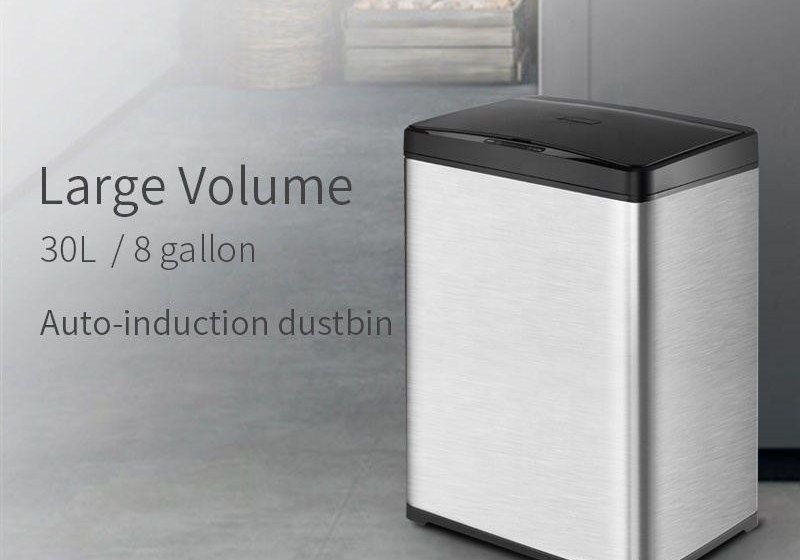
Selecting the right volume becomes simple when you look at actual trash generation rather than just measuring room dimensions. A compact bin could fit a single desk area flawlessly. On the other hand, a larger receptacle is significantly more practical beside a busy food preparation counter. Hi-na Lifestyle manufactures sensor bins in sizes from 12L up to 72L. Consequently, this broad range helps distributors and facility managers align the physical size and emptying schedule with the specific location needs.
Operating element
Details to verify
Reason for importance
Foot traffic volume
The number of times people throw away trash during busy hours
Heavy usage rapidly exposes sluggish sensors and a lack of storage space
Physical space limits
Unobstructed area above the top cover and clear pathways around the unit
An excellent sensor might still struggle if nearby furniture restricts the lid movement
Maintenance schedule
The specific washing technique and the timetable for changing bags
Regular cleaning protects the electronic lens and helps manage bad smells
Movement requirements
Staying in one spot versus moving around occasionally
Wheel attachments help greatly when a container must travel across various work areas
A commercial sensor bin requires a dependable maintenance schedule. Distributors can demonstrate bag installation, washing techniques, and functional modes with much less effort. This happens when the entire product line operates uniformly across different building zones.
How a supplier can support consistent rollout
Business purchasers require a consistent product experience across several rooms or separate properties. Therefore, they must confirm identical sensor reactions, lid speeds, structural materials, and outside coatings in every single manufacturing batch. Hi-na Lifestyle combines internal research and development with rigorous quality inspections. These checks cover raw materials, partially completed components, and fully assembled bins. They supply both stainless steel and powder-coated cold-rolled metal options. These choices work well in diverse commercial settings.
A distributor looking to build a specific product line can utilize the official sensor trash bin catalog. This resource makes it easy to evaluate volumes and physical shapes. Afterward, they can assign the correct designs to specific buyer groups. Teams creating a custom brand collection should also review the available surface coatings and modification choices for their selected model.
A smart trash can is highly beneficial when its lid action, storage size, and cleaning requirements match the local environment. Facility managers should evaluate these specific factors during a standard work shift. Following this test, they should provide employees with brief maintenance guidelines. This training must cover the sensor lens, the plastic bag placement, and the washing timetable. That brief educational step transforms a simple hardware feature into a reliable sanitary habit.
Practical takeaway for commercial teams
Motion detection improves sanitation by eliminating a physical contact point during standard waste disposal. You should select the container size based on actual garbage output. Position the unit exactly where employees are actively working. Always verify the detection speed, closing action, sound levels, and washing accessibility prior to full installation. The correct commercial sensor bin ensures that the most sanitary action is also the simplest one to perform.
For bulk purchasing or large project orders, Hi-na Lifestyle remains available to plan the ideal product shape and branding strategy. This discussion can begin as soon as the intended use, required volume, and daily usage patterns are clearly defined.
FAQ
Do motion sensor trash cans improve hygiene in offices?
They successfully reduce physical lid contact at communal garbage stations. This benefit is particularly noticeable when the unit sits near office desks, printing machines, or staff break rooms. It also requires a rigorous cleaning timetable to work best.
Are touchless bins suitable for commercial kitchens?
These items are highly effective for managing standard food prep garbage. However, their physical volume, bag security, lens location, and washing schedule must perfectly align with the daily kitchen operations.
What causes a sensor bin to open too often?
Frequent triggers usually happen if the detection area points toward a highly active corridor. Additionally, shiny items sitting near the lens can cause issues. A top cover obstructed by a loose plastic liner will also create unwanted openings.
How should teams select bin capacity?
Analyze the maximum trash output during busy hours and check the current emptying schedule. Afterward, ensure there is adequate space for the liner to seal shut. It must never press up against the electronic lens or the top mechanical parts.
Can a commercial sensor bin be branded for distribution?
ODM and OEM partnerships can easily incorporate custom logo placements, unique product shapes, and various approved design modifications. These conversations typically happen after the primary market and specific use cases are firmly established.
Troubleshooting for Commercial Sensor Bin Problems
A practical B2B troubleshooting guide for common commercial sensor bin problems, from false triggers to battery and lid checks.

How Motion Sensor Trash Cans Improve Hygiene in High Traffic Spaces
I show how motion sensor trash cans support cleaner shared spaces, and which size and finish I prefer when hygiene matters most.
Choosing Sensor Trash Cans: Features and Lifetime Cost
Compare sensor trash can capacity, lid clearance, durability evidence and running costs to choose suitable models for wholesale and facility orders.
sensor dustbins’ factory
Welcome all customer to
Welcome all customer to
visit our company every time!
Please fill out the form below and we will get back to you as soon as possible.